
Siding Cost per Square Foot in The Village, OK
The cost siding per square foot in The Village, OK depends mostly on the material you choose, how much wall area your home actually has, and what has to happen before the new siding goes on. This page gives you a working price framework: general industry ranges by material, the factors that move a project up or down within those ranges, and illustrative examples based on wall area rather than floor area.
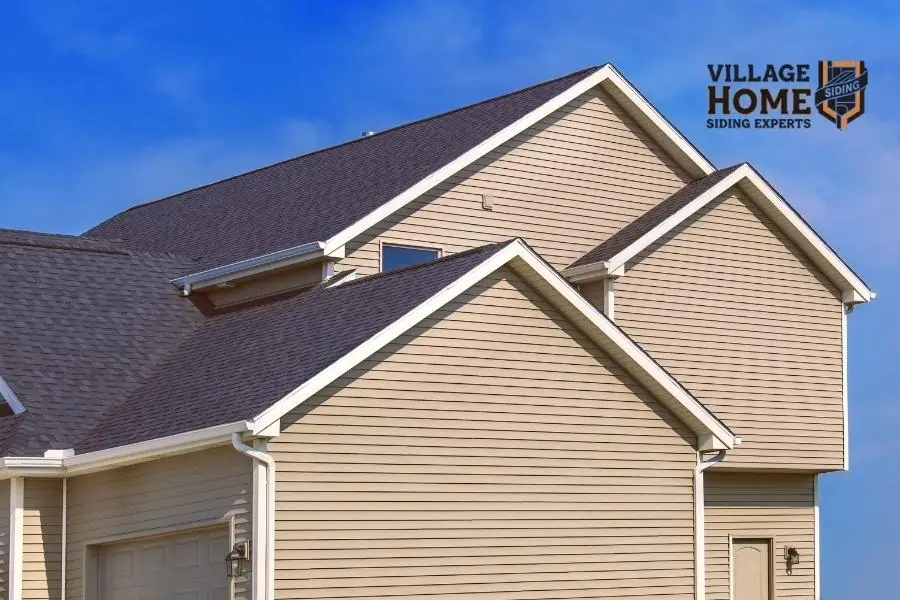
Village Home Siding Experts installs, replaces and repairs siding in The Village and nearby communities, including Oklahoma City, Nichols Hills, Edmond, Warr Acres and Bethany. Use this page to build a realistic budget. When you are ready for a number for your own house, we provide a written quote after a free inspection.
How much does siding cost per square foot in The Village, OK?
As a general industry range, siding typically costs about $3 to $15 per square foot installed for the most common materials. Natural wood and stone veneer can cost more. These figures are national ballpark ranges, not a quote from our company. Your price is set after we measure and inspect your walls.
The ranges cover more than the panels. Materials alone usually cost less per square foot than the installed figure. The installed figure also includes:
- Labor for cutting, fastening, flashing and finishing around windows, doors and corners.
- Removal of old siding (tear-off) and disposal, if the existing siding cannot stay in place.
- Trim and accessories such as J-channel, corner posts, soffit and fascia pieces, starter strips and window trim.
- Waste, which is usually about 10% extra material to cover cuts, overlaps and damaged pieces.
Two homes in The Village with the same floor plan can land at very different points in the range because of material choice, so the next step is to compare materials side by side.
At a glance
What is the average installed cost by siding material?
Installed costs vary widely by material, from vinyl and engineered wood at the low end to natural wood and stone veneer at the high end. The table below shows general industry ranges. Treat them as a starting point for comparison, not as our pricing.
| Material | General industry range, installed (per sq. ft.) | What to know |
|---|---|---|
| Vinyl | $3–$12 | Lightweight and low maintenance. Wide choice of profiles and colors. |
| Insulated vinyl | $5–$18 | Vinyl with a foam backing that adds rigidity and some insulating value. |
| Engineered wood | $3–$12 | Wood look at a lower cost than natural wood. Edges must stay sealed. |
| Metal (steel or aluminum) | $4–$12 | Durable and non-combustible. Can dent in hail depending on gauge. |
| Fiber cement (e.g., James Hardie) | $5–$15 | Heavy, non-combustible, holds paint well. Takes more labor to cut and install. |
| Natural wood | $6–$20+ | Classic appearance. Needs regular painting or staining. |
| Stone veneer | $10–$25 | Often used as an accent on lower walls or entries rather than the whole house. |
For a closer look at the two materials most homeowners compare, see our vinyl siding installation cost page and our fiber cement siding cost page. If you are replacing existing siding, our siding replacement cost page covers tear-off and repair costs in more detail. We install vinyl, fiber cement, James Hardie and board and batten siding.
Material sets the range, but where your project falls inside that range depends on the specific conditions of your house.
Free, no-obligation estimates
Talk to Village Home Siding Experts
Tell us what you need and we’ll take it from there.
At a glance
What factors change the cost of siding?
The biggest cost factors are home size and height, the prep work needed before installation, and local labor and delivery rates. Material choice sets the range, and these factors decide where in that range your project lands.
| Cost factor | Why it changes the price | How we check it |
|---|---|---|
| Wall square footage | More wall area means more material, more labor and more trim. | We measure every wall, subtract openings and add gables. |
| Height and stories | Two-story walls need staging or lifts and take longer to install safely. | We note story count and ground slope around the house. |
| Gables, dormers and rooflines | Angled cuts and short runs add labor and waste. | We count gables, dormers and roof-to-wall intersections. |
| Access and pitch | Steep lots, fences, landscaping and steep roof pitch near walls slow the work. | We walk the perimeter and note obstacles. |
| Tear-off | Removing and disposing of old siding adds labor and dumpster costs. | We check whether existing siding can stay or must come off. |
| Sheathing and damage repair | Rotted or water-damaged sheathing has to be replaced before new siding goes on. | We probe soft spots and inspect around windows and the base of walls. |
| Foam insulation or house wrap | Added layers improve the wall assembly but add material and labor. | We discuss options based on your goals and the existing wall. |
| Custom trim and details | Wide trim, shutters, mixed profiles and accent materials add time. | We list every trim detail in the written quote. |
| Permits | Some projects require a permit and inspection, depending on the city and scope. | We confirm requirements for your city before work begins. |
| Local labor and delivery | Crew rates, material delivery and disposal fees vary by area and season. | Reflected in the written quote for your address. |
A note on waste and tear-off: plan on ordering about 10% more material than your net wall area to cover cuts and waste. Complex homes with many gables or angles may need a bit more. Tear-off is a separate line item, and it often reveals hidden damage. That is why we inspect before quoting rather than estimating from a photo.
Wall area drives most of these factors, so the clearest way to see how size affects cost is to work through a typical home.
At a glance
How much does it cost to side a 1500 sq ft house?
The cost to side a 1,500 sq ft house depends on its wall area, not its 1,500 square feet of floor space. A two-story 1,500 sq ft home can have far more wall to cover than a one-story home of the same size. We give a written quote after a free inspection. The example below shows how to estimate the wall area yourself.
Illustrative example, not a quote:
| Step | One-story, 1,500 sq ft floor area (50 ft x 30 ft) | Two-story, 1,500 sq ft floor area (30 ft x 25 ft footprint) |
|---|---|---|
| Perimeter | 160 ft | 110 ft |
| Wall height | 9 ft | 18 ft |
| Rectangular wall area | 1,440 sq ft | 1,980 sq ft |
| Add two gable ends | +180 sq ft | +120 sq ft |
| Subtract windows and doors | −200 sq ft | −250 sq ft |
| Net wall area | 1,420 sq ft | 1,850 sq ft |
| Add about 10% waste | About 1,560 sq ft of material | About 2,035 sq ft of material |
Multiply your net wall area by the per-square-foot range for your chosen material in the table above to get a rough general budget. Add tear-off and repairs if they apply. The two-story version also needs more staging, which adds labor on top of the extra wall area.
The same method scales up, and a 2,000 sq ft home shows how quickly wall area grows with a second story.
At a glance
How much does it cost to side a 2000 sq ft house?
The cost to side a 2,000 sq ft house is set by its net wall area, height and material, and many 2,000 sq ft homes have somewhere around 1,600 to 2,200 square feet of wall to cover. Your actual figure comes from measurement, and we put the price in a written quote after a free inspection.
Illustrative example, not a quote:
| Step | One-story, 2,000 sq ft floor area (50 ft x 40 ft) | Two-story, 2,000 sq ft floor area (40 ft x 25 ft footprint) |
|---|---|---|
| Perimeter | 180 ft | 130 ft |
| Wall height | 9 ft | 18 ft |
| Rectangular wall area | 1,620 sq ft | 2,340 sq ft |
| Add two gable ends | +280 sq ft | +125 sq ft |
| Subtract windows and doors | −250 sq ft | −300 sq ft |
| Net wall area | 1,650 sq ft | 2,165 sq ft |
| Add about 10% waste | About 1,815 sq ft of material | About 2,380 sq ft of material |
At this size, material choice matters more in total dollars because the per-square-foot difference is multiplied across more wall. Upgrading from standard vinyl to fiber cement, or adding foam insulation, has a larger effect on a 2,000 sq ft home than on a small one.
Smaller homes follow the same math, and vinyl is the material most people price first for them.
How much does it cost to put vinyl siding on a 1000 sq ft house?
Putting vinyl siding on a 1,000 sq ft house usually means covering roughly 1,000 to 1,100 square feet of wall on a one-story home, priced within the general vinyl range of $3–$12 per square foot installed. Your exact price comes from a written quote after a free inspection.
Illustrative example, not a quote: a one-story 1,000 sq ft house measuring 40 ft x 25 ft has a 130 ft perimeter. With 8 ft walls, that is 1,040 sq ft of rectangular wall. Add about 125 sq ft for two gable ends, subtract about 150 sq ft for windows and doors, and the net wall area is about 1,015 sq ft. With 10% waste, you would order about 1,115 sq ft of material, or roughly 11 "squares" (one square equals 100 sq ft).
On a small house, fixed costs such as trim, setup, delivery and disposal take up a larger share of the total. The vinyl grade also matters. Thicker panels and insulated vinyl cost more but resist wind and impact better. See our vinyl siding installation cost page for grade comparisons.
Once you settle on vinyl, the next choice most homeowners face is the profile, which usually means choosing between 4-inch and 5-inch exposure.
Is 4 inch or 5 inch siding better?
Neither 4-inch nor 5-inch siding is better in every case. The right choice depends on the look you want, the scale of your house and whether you need to match existing siding. The measurement refers to the exposure, which is the visible height of each lap course.
- 4-inch exposure (often sold as double 4): narrower courses give a traditional, finer look that suits smaller ranch homes and older styles. More courses per wall means slightly more installation time.
- 5-inch exposure (double 5): wider courses give a cleaner, more modern look and suit larger walls and two-story homes. Fewer courses can mean a little less labor.
- Matching for repairs: if you are replacing part of a wall, match the existing exposure exactly, or the patch will stand out.
- Other profiles: Dutch lap, beaded and board and batten profiles change the look again. Board and batten is often used on gables or as an accent.
Profile choice has only a small effect on price, but it does affect how long installation takes, which leads to the question of timing.
How long does it take to side a 1500 sq ft house?
Siding a 1,500 sq ft house generally takes several working days to a couple of weeks, depending on material, tear-off, repairs and weather. Vinyl on a simple one-story home is at the faster end. Fiber cement on a two-story home with repairs takes longer.
- Inspection and quote: we measure walls, check for damage and confirm the material and profile.
- Ordering and permits: material is ordered with waste included, and permits are pulled where required.
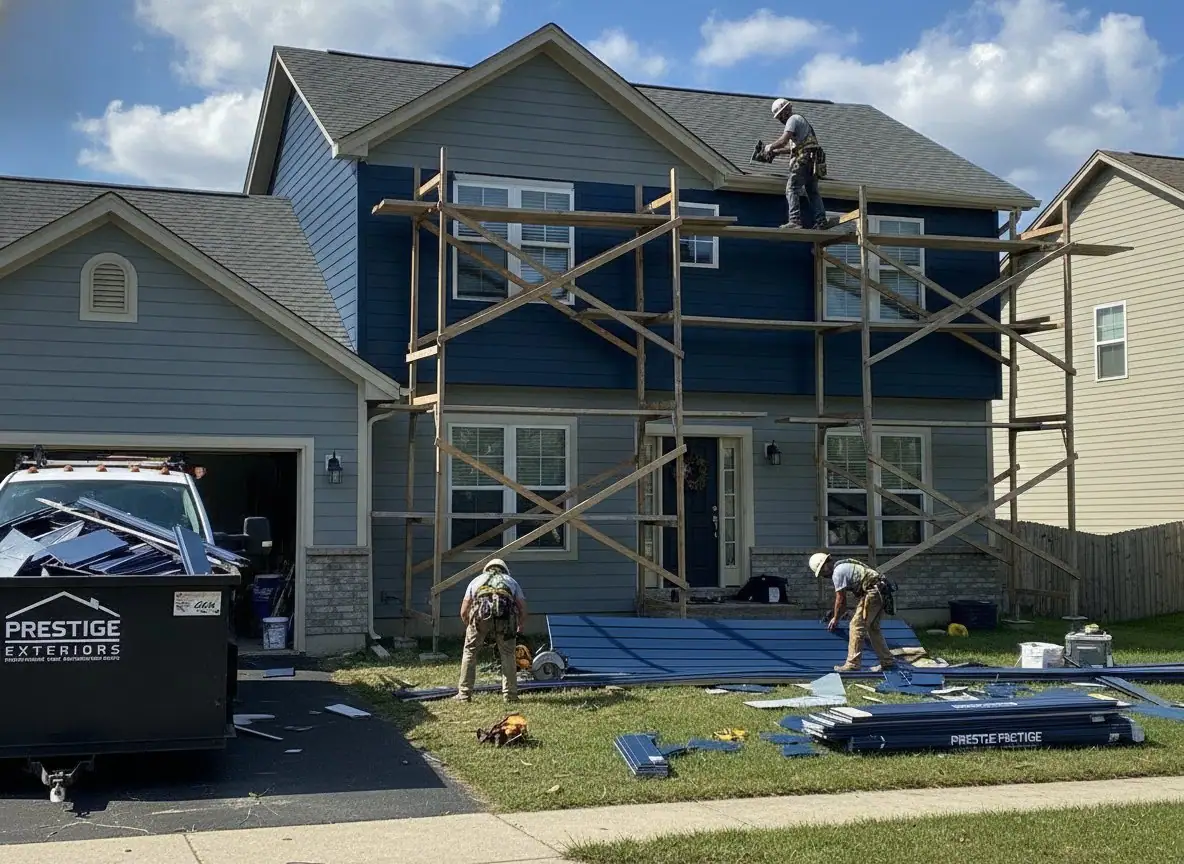
- Tear-off: old siding is removed and hauled away, one or more walls at a time.
- Repairs and wrap: damaged sheathing is replaced, then house wrap and flashing go on.
- Installation: starter strips, corners, window trim and siding courses go up, followed by soffit and fascia if included.
- Finish and cleanup: caulking, paint touch-up for fiber cement, nail sweep and a final walkthrough.
Read moreShow less
Fiber cement takes longer because the boards are heavy, must be cut with dust control and need finishing details. Wind and rain can pause work. Hidden damage found during tear-off can add time. If your roof also needs work, the two schedules have to be coordinated.
What does a new roof and siding cost together?
A new roof and siding cost together is the sum of two separate scopes. Each is priced on its own factors, but doing both in the same window can reduce duplicated setup, disposal and scheduling problems. Village Home Siding Experts handles the siding portion and coordinates with your roofing contractor so the work happens in the right order.
- Sequence: the roof usually goes first, so roof-to-wall flashing, drip edge and gutters can be set before siding is finished against them.
- Shared costs: one dumpster window, one round of landscaping protection and fewer separate site setups.
- Storm claims: after hail or wind, roof and siding damage are often documented in the same insurance claim. Keeping both scopes aligned helps the adjuster see the full picture.
- Budget planning: ask for each scope as a separate line so you can compare and phase the work if needed.
Because combined projects are larger, many homeowners also want to know how to pay for them.
How do financing, insurance and free estimates work?
We offer free inspections and estimates, financing is available, and we help homeowners with insurance claims. Here is how each one works.
Free estimate
We inspect your walls, measure net wall area, check for damage and confirm whether tear-off is needed. You receive a written quote that lists material, trim, tear-off, repairs and permits. You can start with the three inputs below to get a closer estimate.
Wall-area worksheet
- Measure each wall's length and height and multiply them. Add the results together.
- For each gable, multiply the width by the rise and divide by two. Add these.
- Subtract the area of windows and doors.
- Add about 10% for waste.
Financing
Financing is available for siding projects. Ask about options during your estimate so you can compare them against your quote.
Read moreShow less
Insurance claims
If hail or wind damaged your siding, we can inspect it, document the damage and help you through the claim process. Coverage depends on your policy and deductible.
Learn more about our siding services or about us.
FAQ
Frequently asked questions
How much is vinyl siding for a 1200 sq ft house?
A one-story 1,200 sq ft house often has roughly 1,100 to 1,300 sq ft of net wall area. Multiply that by the general vinyl range of $3–$12 per square foot installed for a rough idea, then add tear-off and repairs if needed. We give an exact written quote after a free inspection.
Does the cost include removing old siding?
Not always. Tear-off and disposal are usually a separate line item. Our written quote states clearly whether removal is included.
How much extra material should be ordered for waste?
About 10% over net wall area is typical. Homes with many gables, dormers or angles may need a little more.
Does homeowners insurance pay for siding?
Insurance often covers sudden damage such as hail or wind, subject to your policy and deductible. It usually does not cover wear or age. We help homeowners document damage and work through claims.
Is fiber cement worth the extra cost over vinyl?
Fiber cement costs more but is non-combustible, holds paint well and resists impact. Vinyl costs less and needs little upkeep. Compare the two on our fiber cement siding cost page.
Does the cost change in Oklahoma storm season?
Demand for crews and materials often rises after spring hail and wind storms, which can affect scheduling and availability. Getting an inspection early helps you plan.
For a written quote on your home, call Village Home Siding Experts at (405) 433-7838 to schedule a free inspection.
Why choose us
Why choose Village Home Siding Experts?
Free estimates
Get a clear, no-obligation estimate before any work begins.
Licensed & insured
Your property and our crew are protected on every project.
Residential & commercial
One team for homes, multi-family and commercial properties.
Locally owned & operated
A local team serving your community and the surrounding area.
Get in touch
Find siding help near you
Request a free estimate online or give us a call — our team will follow up quickly.
- Call us(405) 433-7838
- Visit9207 N Pennsylvania Pl, The Village, OK 73120
- HoursMonday- Sunday: 7 AM- 7PM